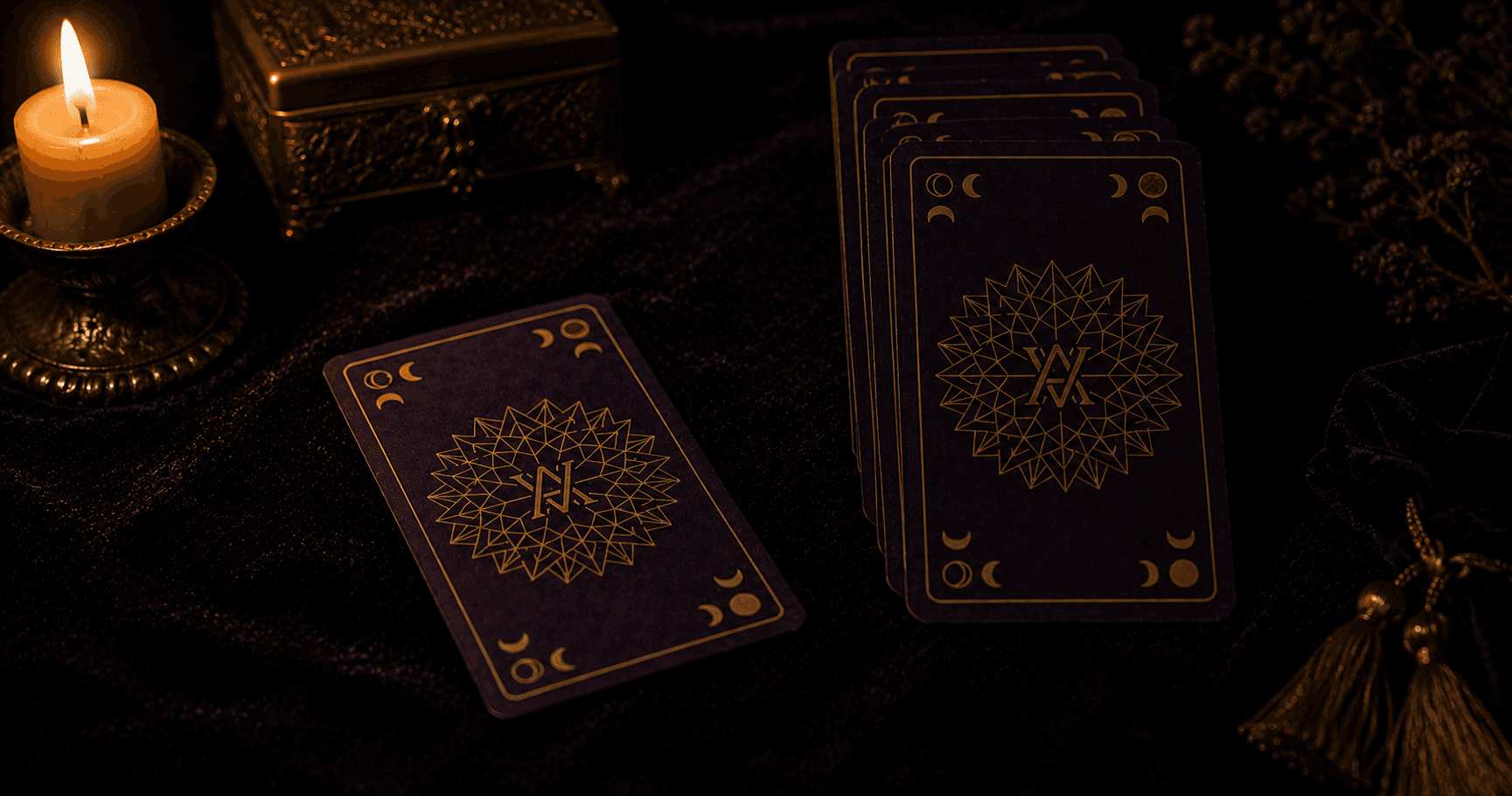
When a tarot card is drawn and lands upside down relative to the reader, it is called reversed. Many people meet their first reversal and assume it simply means the bad version, or the opposite, of the upright card. In the Rider-Waite-Smith tradition it rarely works that cleanly. A reversal is better understood as a different angle on the same card — usually a blocked, internalized, delayed, or shadow-side expression of its upright meaning.
Reversed is not opposite
The common mistake is to treat the reversed card as a negation: if the upright Star is hope, the reversed Star must be despair. That flattens it. A reversed Star is better read as hope that is being avoided, dimmed, or refused — the same energy, turned inward or held back, rather than erased. The card's core meaning still applies; the reversal describes the relationship to that meaning, not its absence.
Four ways a reversal commonly reads
Readers usually reach for one of a few interpretive moves when a card is reversed. Blocked: the card's energy is present but obstructed, unable to move. Internalized: the theme is turned inward, felt privately rather than acted out in the world. Delayed: the upright meaning is coming, but not yet, or not on the timeline expected. Shadow: the more difficult or unintegrated face of the card's theme. Which reading fits depends on the card and the position it lands in — there is no fixed rule that applies to all 78.
Treat a reversal as named when it appears, not glossed over. The fact that a card arrived inverted is part of what the spread is saying, and smoothing it back into the upright meaning quietly throws away information.
Whether to use reversals at all
Not every reader uses reversals. Some shuffle and read every card upright, taking the full range of a card's meaning — light and shadow — from the upright position alone. That is a legitimate tradition, not a shortcut. Vidastral draws cards that may be upright or reversed and reads the reversal as its own interpretive layer, because the inverted position carries information worth naming. If you read for yourself, either approach is valid; what matters is consistency, so the reversal means something because you have decided it does.
As with everything in tarot, a reversal is interpretive, not predictive. A reversed card does not announce that something will go wrong. It offers a particular shading of a theme for you to hold against your own situation — and, often, the more interesting question is why that shading caught your attention at all.