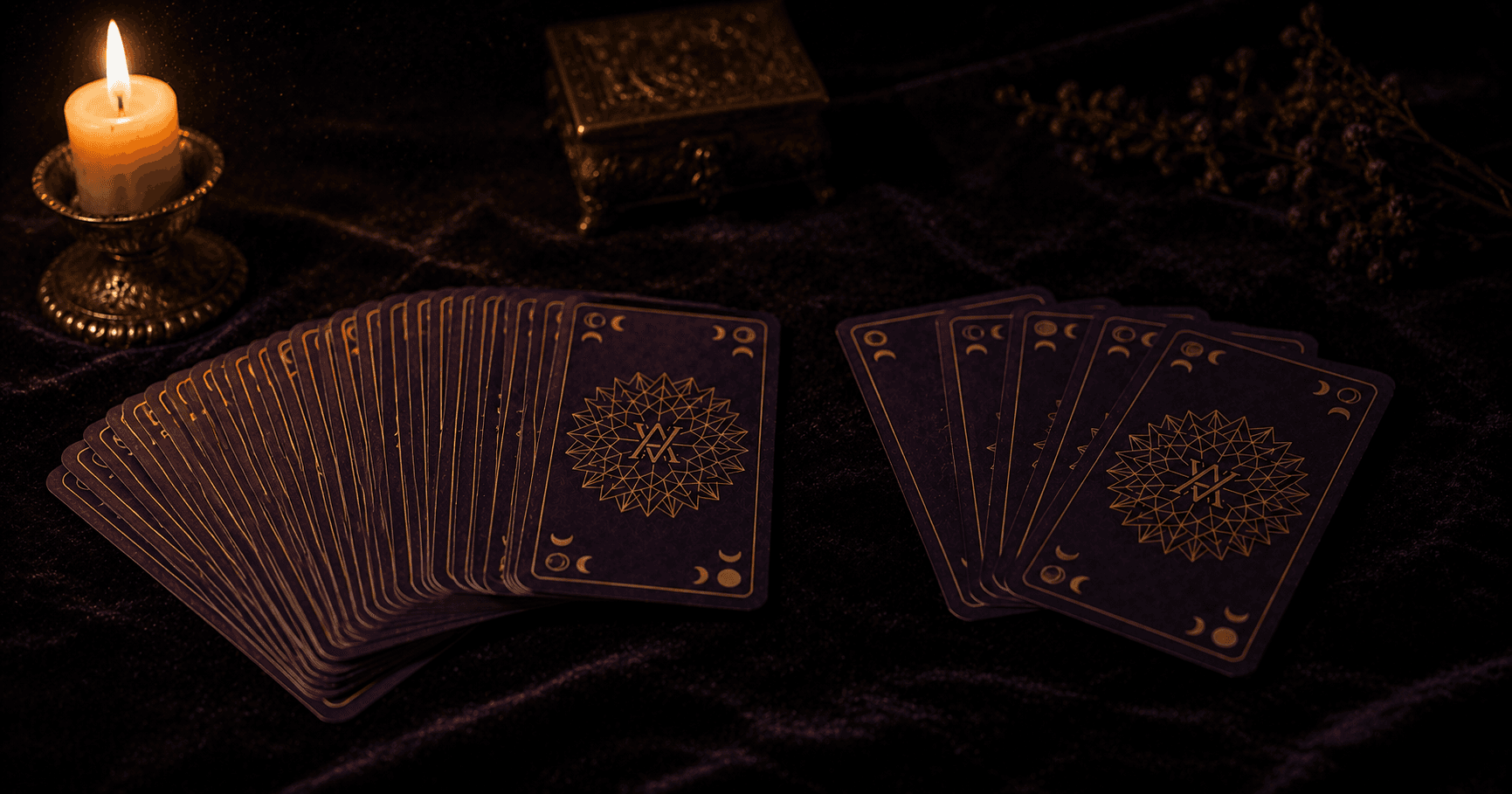
A full Rider-Waite-Smith tarot deck has 78 cards, and they are not all the same kind of card. They divide into two groups: 22 Major Arcana and 56 Minor Arcana. Knowing which group a card belongs to is the first thing an experienced reader notices, because the two are read at different altitudes — one describes the weather of a life, the other the texture of a day.
The 22 Major Arcana
The Major Arcana are the 22 numbered trumps that run from The Fool (0) through The World (21): The Magician, The High Priestess, The Empress, The Emperor, The Hierophant, The Lovers, The Chariot, Strength, The Hermit, Wheel of Fortune, Justice, The Hanged Man, Death, Temperance, The Devil, The Tower, The Star, The Moon, The Sun, Judgement. These are usually read as larger forces and turning points — the archetypal themes that organize a chapter of a life rather than describe a single moment. When a Major appears, the tradition tends to treat it as significant: a pattern bigger than the day's errands.
The 56 Minor Arcana
The Minor Arcana are the remaining 56 cards, organized into four suits — Wands, Cups, Swords, and Pentacles — each running Ace through Ten plus four court cards (Page, Knight, Queen, King). Loosely, Wands speak to drive, work, and creative energy; Cups to emotion and relationship; Swords to thought, conflict, and clarity; Pentacles to money, body, and the material world. The Minors are usually read as the texture of ordinary life: the tasks, feelings, conversations, and resources a question actually moves through.
Why the split matters in a reading
The proportion of Majors to Minors in a spread is itself a piece of information. A reading made almost entirely of Major Arcana is often interpreted as one in which the larger pattern matters more than the particulars — a season of change rather than a single decision. A reading made entirely of Minors tends to point back to the concrete and the daily: the small adjustments rather than the grand arc. Neither is better. They are different scales of the same question.
Notice not only which cards appear but at what altitude they speak. The same question can be answered at the scale of a life chapter or the scale of a Tuesday, and the deck tends to tell you which you are being asked to look at.
None of this is prediction. The Major / Minor distinction is a lens for reading, not a hidden fortune — it tells you how big a frame to bring to the cards, not what will happen. An honest reading, including the kind Vidastral generates, uses the split to set the tone of the reflection, then leaves the meaning where it belongs: in what you recognize of your own situation.